Jiaozi: Chinese New Year Dumplings
In northern China the last hours of the old year are spent around a table wrapping dumplings, and the first bites come at midnight.
Chinese New Year 2027 falls on Saturday, February 6, 2027, beginning the Year of the Fire Goat (丁未年). The traditional celebrations run for fifteen days and end with the Lantern Festival on Saturday, February 20, 2027.
Chinese New Year 2027: dates, greetings and customsAbout the Goat
Published
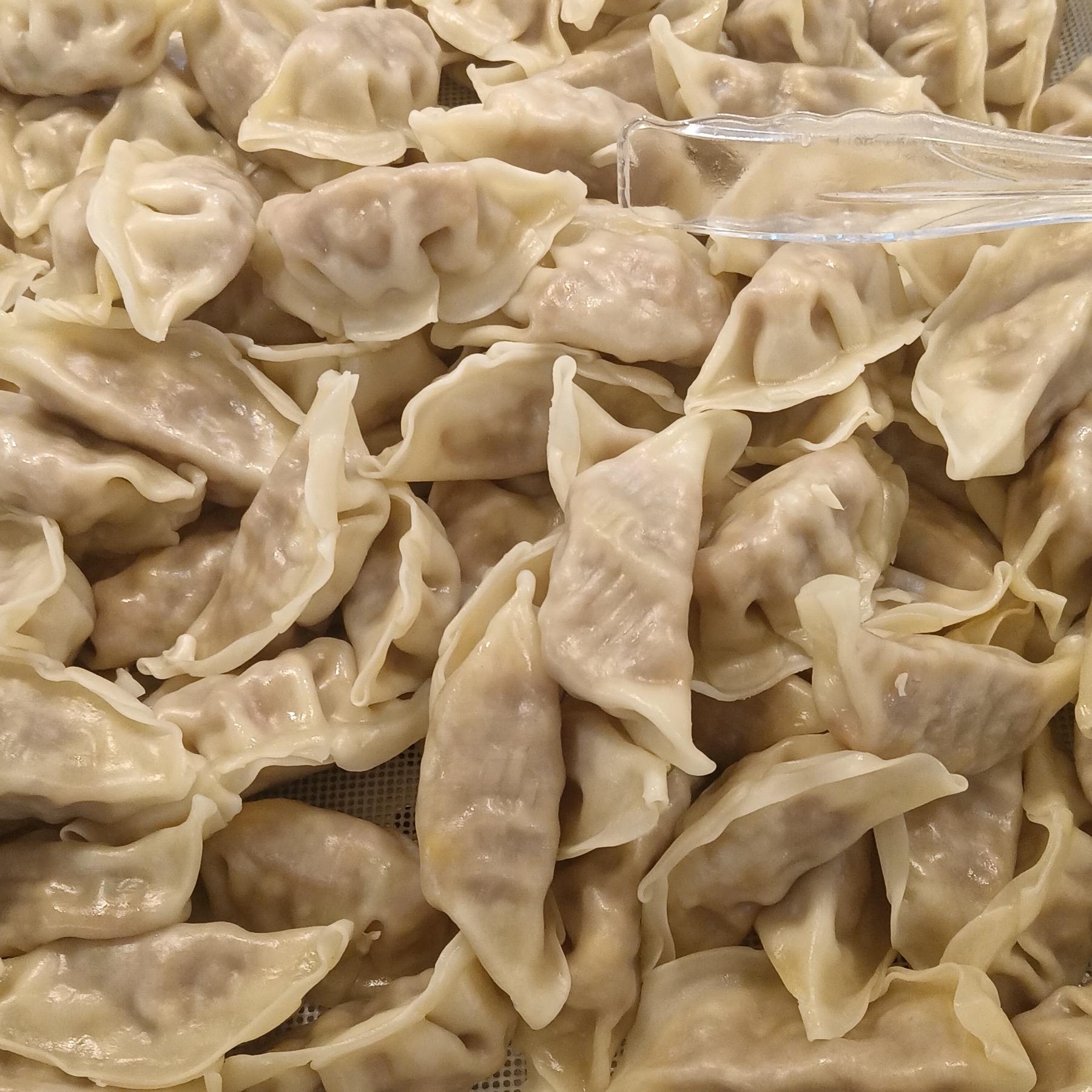

Why Do Families Eat Dumplings at Midnight?
In northern China the dumplings are timed to the turn of the year: the family wraps them in the evening and eats them around midnight, just as the old year gives way to the new. Columbia University's teaching notes call midnight jiaozi a northern custom that is still widely observed[1]. The reason given is a pun on the clock. Old Chinese timekeeping split the day into twelve two-hour periods, and the one from 11 pm to 1 am was called 子时 (zǐshí); on New Year's Eve that period marked the change from the old year to the new and had its own name, 交子 (jiāozǐ), which sounds very close to jiaozi[2]. Treat this as the folk explanation families give, not a proven word history.
In practice the timing is looser. The cookbook author Grace Young told NPR that the dumplings are eaten between midnight and 2 a.m.[3], and CGTN notes that in northern China the whole family usually stays up on New Year's Eve until the new year arrives, so that eating jiaozi at the right moment means saying goodbye to one year and hello to the next[4]. The rest of that long night is on our New Year's Eve guide.
The shape adds a second meaning. CGTN says jiaozi stand for wealth because they look like the ingots once used as money in China[4], and National Geographic Education names those ingots yuanbao, which served as currency in China for more than 1,000 years[5].
Wrapping Night: A Coin, a Lid and a Chestnut
Making the dumplings is a family job, and a few small rules travel with it: one dumpling hides a coin, the lid stays on the pot, and nobody wants a dumpling to split open. NPR describes how, in many homes, the whole family gathers after the feast is cleared to make dumplings late into the night[3]. Some cooks tuck a coin into a single dumpling, and whoever finds it is said to have good luck in the coming year[2].
One woman's memory, quoted by NPR from a cookbook, adds a warning: lifting the lid too soon while the jiaozi boiled could mean losing your fortune in the coming year[3]. Grace Young also mentions a candied chestnut hidden in a dumpling served to newlyweds; the belief is that a couple who get it will be blessed with a son[3]. A student folklore entry at the University of Southern California records one family's rule that the dumplings must not break, because they hold everyone's wishes for the new year[6]. Customs like these sit beside the wider New Year taboos, and like them they change from one household to the next.
A Northern Habit, With Southern Cousins
New Year dumplings are mainly a northern custom, so a southern family may well serve something else on the Eve. The Lam Museum of Anthropology at Wake Forest University says dumplings are one of the main dishes of the New Year's Eve dinner in northern China, while very few people in southern China serve them that night[7]. Explaining the northern habit to NPR, the anthropologist E. N. Anderson pointed out that food in northern China was scarce this late in the winter[3].
The fillings carry meanings of their own. Xinhua reports that in the north celery and chives stand for diligence and longevity, while in the south ingot-shaped egg dumplings and fried yau gok carry hopes for a prosperous year[8]. In Cantonese-speaking regions the half-moon jau gok is the dumpling most tied to the New Year[5], and Shanghai tradition holds that egg-skin dumplings (danjiao) look like gold ingots[1]. The round tang yuan are a different food, eaten at the Lantern Festival that closes the season[5]; see our page on tangyuan. For more on how customs shift across China, read about regional variations.
Dumplings After the Eve: Day Five and the Qing Court
The Eve is not the only dumpling night. Northern families make them again on the fifth day of the new year, and the Qing emperors took their New Year dumplings seriously enough to set rules about the filling. CGTN says jiaozi are the most delicious custom of the fifth day, Po Wu, especially in northern China, because their shape recalls the yuan bao ingots once used in place of money[9]. The day five entry in our day-by-day guide covers the rest of that day.
In Tianjin and the surrounding area, cooks press the wrapper edges tightly so that anyone who talks about them behind their back will have their mouth zipped in the coming year[2]. At the Qing court (1644 to 1911) dumplings went by the name bobo, the first meal for the royal family had to be dumplings, and those eaten on New Year's Eve had to have a vegetarian filling[4].
How Far Back Do Dumplings Go?
Nobody can say exactly when or where jiaozi began, but archaeologists have found dumpling-like food in Chinese tombs that are thousands of years old. Xinhua says plainly that their origins are not clear, and reports that Shandong Museum archaeologists date the earliest physical record to about 2,500 years ago: yellow, triangular food items, five or six centimeters on the longer side, found in a tomb at Tengzhou[8].
A chef figurine from the Eastern Han and Three Kingdoms periods, found in a tomb in Chongqing's Zhong County and now in the Sichuan Museum, shows a dumpling, and more than ten pottery figurines with dumplings have turned up in Chongqing alone[8]. In the dry ground of the Astana Tombs at Turpan, Xinjiang, about 20 Tang Dynasty (618-907) dumplings have been excavated; they are close to modern ones in size and shape and were often placed in a vessel beside the head of the person buried there[8]. Yan Zhitui, writing in the Northern Qi (AD 550-577), called jiaozi shaped like a crescent moon a common food[10].
The best-known origin story is a legend, and it belongs to the winter solstice, not the New Year. A story says that the Eastern Han physician Zhang Zhongjing came home one winter to find villagers with frostbitten ears and made ear-shaped "jiaoer" of minced mutton and herbs for them; eating jiaozi at the winter solstice is said to commemorate his kindness[11]. Tradition has long credited the Eastern Han with the invention[10], though the Tengzhou find is centuries older. Why the dish lasted is easier to answer: the scholar Wang Renxiang told Xinhua it was the combination of convenience, taste and rich symbolism[8]. Our history of Chinese New Year traces how the wider festival took shape, and recipes we trust are listed below.
Recipes We Recommend
We do not publish our own recipes. These are traditional versions by cooks with real standing in Chinese home cooking, each cooked and photographed by its author and free to read.
- Chinese Dumplings - How to make it from scratch (Taste Asian Food)
A classic pork and Chinese chive jiaozi made from scratch with a homemade dough, boiled or pan-fried, with a video of the wrapping.
- The ONLY Dumpling Recipe You'll Ever Need (The Woks of Life)
The Woks of Life family's own dumpling recipe, with a pork and leafy-green filling, step photos and a video covering wrapping, boiling and pan-frying.
Questions and Answers
Why do Chinese families eat dumplings at New Year?+
Source: China Daily, "A dumpling for every season" (2017), CGTN, "Strict rules for eating dumplings set by emperors in Qing Dynasty" (2022)
Do southern Chinese families eat dumplings on New Year's Eve?+
Source: Lam Museum of Anthropology, Wake Forest University — "Chinese New Year Food", National Geographic Education — "Lunar New Year"
What does it mean to find a coin in a dumpling?+
Did Zhang Zhongjing invent dumplings?+
Source: China Daily (Nanyang), "Eating dumplings during winter solstice" (2014), Xinhua via People's Daily Online, "Feature: China's history of dumplings, from archaeological finds to modern tables" (2024)
More on the Year Ahead
Sources & References
- Columbia University, Asia for Educators, "The Lunar New Year: Rituals and Legends"
- China Daily, "A dumpling for every season" (2017)
- NPR, The Salt, "Chinese New Year: Dumplings, Rice Cakes And Long Life" (2013)
- CGTN, "Strict rules for eating dumplings set by emperors in Qing Dynasty" (2022)
- National Geographic Education — "Lunar New Year"
- USC Digital Folklore Archives, "Don't break the Dumplings at New Year's Eve" (2023)
- Lam Museum of Anthropology, Wake Forest University — "Chinese New Year Food"
- Xinhua via People's Daily Online, "Feature: China's history of dumplings, from archaeological finds to modern tables" (2024)
- CGTN, "Po Wu: Everything about Spring Festival's most auspicious day" (2019)
- Wikipedia, "Jiaozi"
- China Daily (Nanyang), "Eating dumplings during winter solstice" (2014)