Mandarin Oranges
A pair of mandarin oranges is the simplest New Year gift there is, and the reasons behind it are all in the way the fruit is named.
Chinese New Year 2027 falls on Saturday, February 6, 2027, beginning the Year of the Fire Goat (丁未年). The traditional celebrations run for fifteen days and end with the Lantern Festival on Saturday, February 20, 2027.
Chinese New Year 2027: dates, greetings and customsAbout the Goat
Published
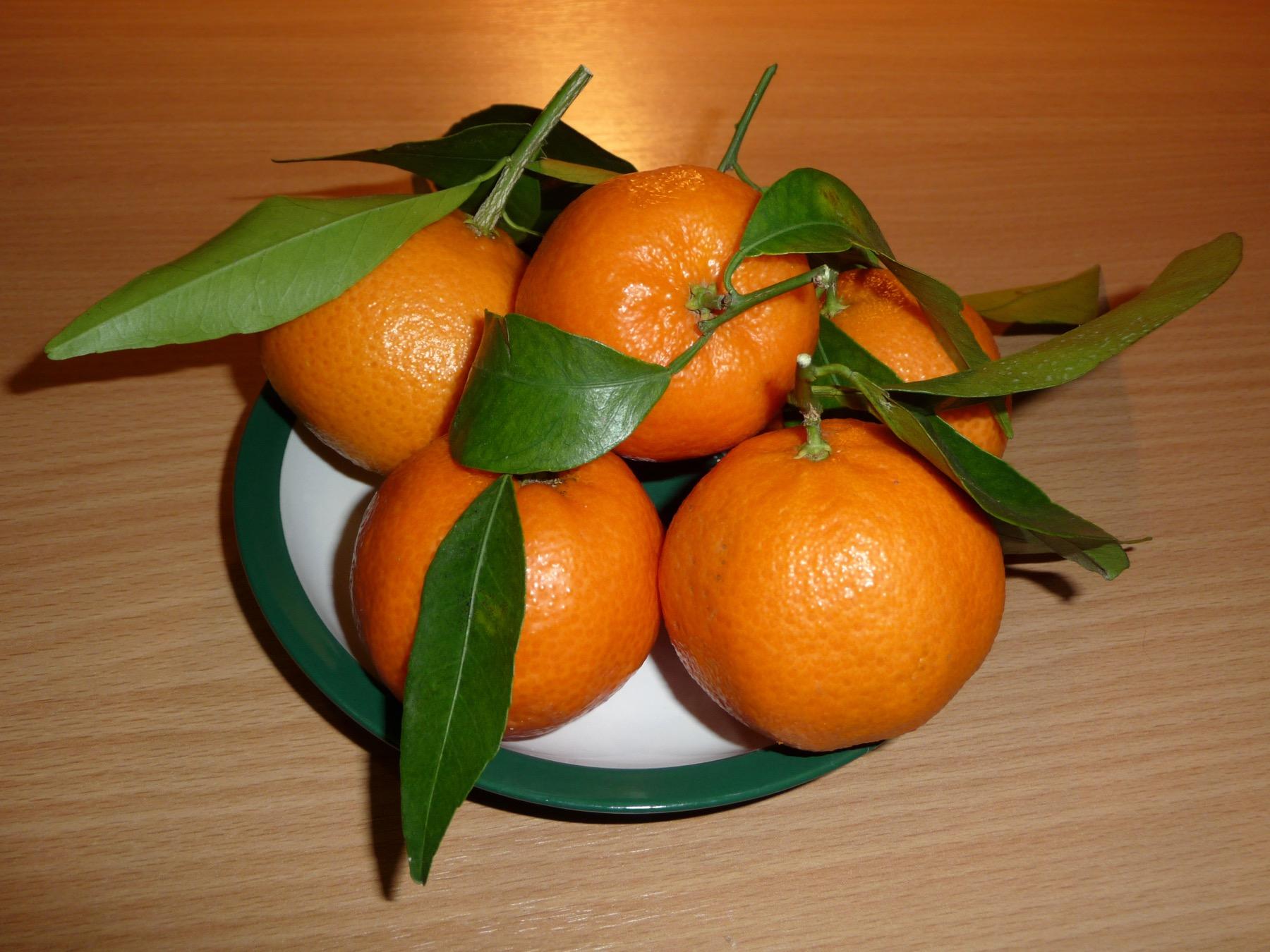

Why Oranges Mean Gold and Good Fortune
Mandarin oranges belong to Chinese New Year because their names sound lucky. In Cantonese the word for the fruit sounds like the word for gold, so a bowl of them on the table, or a pair in your hands at the door, is a wish for money in the year ahead. David K. Jordan of UC San Diego notes that one of several Cantonese words for orange, gām 柑, is exactly homonymous with gām, gold (金)[1]. A Malaysian fruit trader quoted in The Star was blunter: mandarin oranges, "kam" in Cantonese, mean gold, so giving one is like offering a piece of gold, and they are usually given in generous quantities[2].
San Francisco's Asian Art Museum offers a second Cantonese reading. It gives the fruit's name as gut, which ties it to good fortune (dai gut) and makes it an important item for the household[3]. The museum adds that the round shape and golden color stand for the sun and connect the fruit with the yang principle[3].
Mandarin speakers have a pun of their own. Jordan notes that, for some speakers, the syllable jú sounds close enough to zhù 祝, "wish", to call up the New Year phrase Wèi nǐ zhùfú 为你祝福, "blessings on you"[1]. Singapore's National Heritage Board links the orange exchange to a Chinese name that is a homonym for "luck in abundance", and to the Cantonese gan (柑) sounding like gold, kam (金)[4]. To say a wish as you hand the fruit over, try one from our list of New Year greetings.
Bring Two, Take Two: The Visiting Custom
Bring a pair of mandarin oranges when you call on a family during the New Year, hand them to your host, and expect a pair back in return. That is the whole custom. Singapore's heritage inventory describes it: it is customary to offer the host a pair of mandarin oranges and to receive another pair in return[4]. The same entry describes the round of visits that begins on the first day: the younger generation offers greetings with a pair of oranges, and the older generation answers with good wishes and a red packet[4].
The oranges also turn up inside the home. The Asian Art Museum describes a pair of mandarin oranges, together with red envelopes of money, placed next to the pillow of every child in the family at New Year, standing for dai gut lai see, "good fortune and good business"[3]. Dishes of oranges are set in front of altars and on top of New Year presents for friends, and oranges serve as the "return" gift when someone gives you a present[3].
Size counts for something too. A Malaysian farm owner told The Star that larger oranges are believed to bring the recipient greater fortune, and that giving oranges is also a way of saying thank you for a year of support, in life or in business[2]. For what else to carry on a visit, and what to leave at home, see our guide to New Year gifts.
The Rest of the Citrus Family
Mandarin oranges are not the only citrus of the season. Kumquats, calamondins and pomelos each have their own lucky reading in Cantonese, and each is worth knowing before you shop for the season. Kumquats, Jordan writes, are little round gold things and are actually called "money oranges", gāmgām 金柑 in Cantonese and jīnqiánjú 金钱桔 in Mandarin[1]. Kumquats and calamondins are forced into fruit in time for New Year, when little bushes covered in gold fruit suddenly appear in pots everywhere[1].
The potted mandarin orange shrubs sold in flower markets carry their own phrases. The Asian Art Museum says these fruiting shrubs represent the Cantonese terms gut shue hoi fa and gut shue kit gwo, "flowering of the lucky tree" and "the lucky tree bearing fruits"[3]. A Malaysian trader adds that calamansi, "kat" in Cantonese, stands for peace and tranquillity in the household[2]. In practice the pots work as New Year decorations as much as fruit.
The English word "kumquat" comes from this vocabulary. Jordan traces it to the Cantonese compound gāmgwāt 柑橘, which, despite giving English its word, properly means a mandarin orange rather than a kumquat[1].
The pomelo is the giant of the group. The Asian Art Museum says it is important to have at least one pomelo in the house for decoration, or better a pair, since good things come in pairs; in Cantonese its name, you, sounds like "to have"[3]. In Malaysia pomelos are called "lok yau" or "ta yau" (big orange) in Cantonese, meaning abundance and greatness, and their size makes them a popular gift[2].
Oranges on the Water at Chap Goh Mei
On the fifteenth night of the first lunar month, mandarin oranges turn from gifts into messages. In Malaysia and Singapore some unmarried women write their names and contact details on the fruit and throw it into a lake or river, hoping a potential suitor retrieves it[5]. In Penang the oranges go into the sea on Chap Goh Meh, the night of the Lantern Festival[6].
Penang keeps the custom public. The Star's report from the Esplanade in George Town opens with the belief: toss a mandarin orange into the sea on Chap Goh Meh and you might have a suitor by the next year, a tradition the state upholds with annual festivities[6]. At Padang Kota Lama in 2018 the New Straits Times found women writing their names on the oranges, some adding phone numbers; the paper adds that the custom is said to have come from the Hokkien community of southern China in the 19th century, though that is lore, not a settled date[7].
The custom has widened. The Star noted in 2019 that the trend is now to write wishes on the fruit before tossing it, and that it is no longer limited to single women looking for partners[8]. For the other foods of the season, from dumplings to rice cake, start at our New Year food guide.
Questions and Answers
Why do people give mandarin oranges at Chinese New Year?+
Source: David K. Jordan, UC San Diego, "Oranges as Symbols of Happiness", Asian Art Museum, "Fruits and Flowers for the Chinese New Year" (brochure)
How many mandarin oranges should I bring when visiting?+
What do kumquat plants mean at Chinese New Year?+
Source: David K. Jordan, UC San Diego, "Oranges as Symbols of Happiness", Asian Art Museum, "Fruits and Flowers for the Chinese New Year" (brochure)
Why do people throw oranges into the water at Chap Goh Mei?+
Source: Wikipedia, "Lantern Festival", The Star, "Chap Goh Meh a sweet tradition: throwing oranges will always remain an unforgettable event for all" (2019)
Explore the Zodiac Year
Sources & References
- David K. Jordan, UC San Diego, "Oranges as Symbols of Happiness"
- The Star (Malaysia), "Oranges of all kinds to invite luck and blessings" (2025)
- Asian Art Museum, "Fruits and Flowers for the Chinese New Year" (brochure)
- National Heritage Board Singapore, Roots.gov.sg, "Chinese New Year" (Intangible Cultural Heritage inventory)
- Wikipedia, "Lantern Festival"
- The Star, "Chap Goh Mei sees single ladies gather to toss mandarin oranges at the Esplanade in Penang" (2024)
- New Straits Times, "Finding love through oranges during Chap Goh Meh" (2018)
- The Star, "Chap Goh Meh a sweet tradition: throwing oranges will always remain an unforgettable event for all" (2019)